
By now you have met all three approaches: the solid, stacked walls of a full-log home, the open elegance of a timber frame, and the mix-and-match flexibility of a hybrid. So which is right for you? The honest answer is that it depends on what you value most. This lesson gives you a framework to decide with confidence.
Comparing the three across what matters
Look and feel
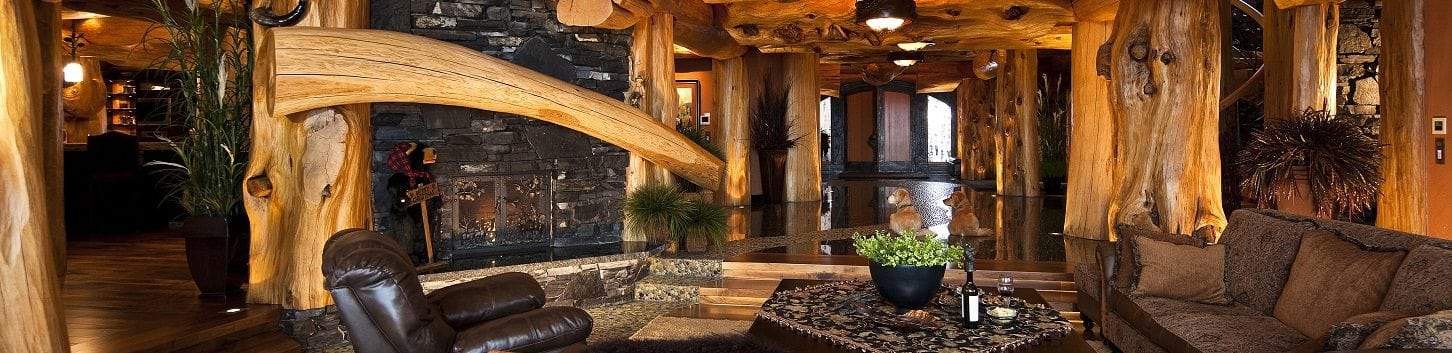
Full-log homes are the most overtly rustic — massive, solid, unmistakably “log cabin.” Timber frames feel lighter and more architectural, with soaring exposed joinery and lots of glass. Hybrids let you choose your blend, placing each look exactly where you want it.
Cost
Full-log and timber-frame construction both carry a premium over conventional building because of the material and the skilled labor involved. Hybrids are typically the most budget-flexible, since you can dial back to conventional walls wherever character is not essential.
Energy performance
A timber frame wrapped in SIPs is usually the strongest performer, thanks to its continuous, airtight insulation. A full-log wall has real thermal mass that helps with comfort, but a solid-log wall’s insulating value is moderate. Hybrids land in between and can be tuned upward by framing more of the house conventionally.
Maintenance
Full-log exteriors need the most ongoing care — periodic staining, sealing, and checking the joints between logs. Timber frames, with their weather shell doing the protecting, generally ask less of the exterior walls. Hybrids reduce the log surface area you have to maintain.
Settling and movement
Solid-log walls settle noticeably as the logs dry and compress, which calls for special details around doors, windows, and stairs. Timber frames move very little by comparison. In a hybrid, settling is confined to the log portions, so it is easier to manage.
Guidance by priority
- If character is everything and you want that solid, hand-hewn presence, lean toward a full-log home.
- If budget is the tightest constraint, a hybrid with conventional walls behind log and timber accents stretches your dollars furthest.
- If energy efficiency is the priority, a timber frame wrapped in SIPs is hard to beat.
- If low maintenance matters most, favor a timber frame or a hybrid that limits exposed log surface.
How to decide
- Rank your priorities — character, cost, energy, maintenance, and how much settling you are willing to manage — from most to least important.
- Set a realistic total budget, including land, foundation, and finishing, not just the wood package.
- Walk through finished examples of each type in person; photos rarely capture how the spaces actually feel.
- Match your top priority to the guidance above to find your starting point.
- For most buyers, test the hybrid option next — it lets you keep your must-have character while trading off elsewhere.
- Bring your shortlist to an experienced builder who works in all three systems, such as Pioneer Log Homes of B.C., and ask them to model cost and energy for your specific plan.
- Revisit your ranking once you see real numbers, and adjust the mix until the home matches both your heart and your budget.
Key takeaways
- There is no single best system — the right choice follows your top priority among character, cost, energy, and maintenance.
- Full log offers the strongest rustic character but the most maintenance and settling.
- Timber frame with SIPs leads on energy performance and low movement.
- Hybrids are the most flexible, balancing character against budget and efficiency.
- Rank your priorities, set a budget, see homes in person, and have a builder model your specific plan before committing.