
Good design flows from its surroundings. You don’t need to be Frank Lloyd Wright to realize that the views and natural features of your land — terrain, vegetation, sunlight — will influence the form of your home.
Let the view shape the windows
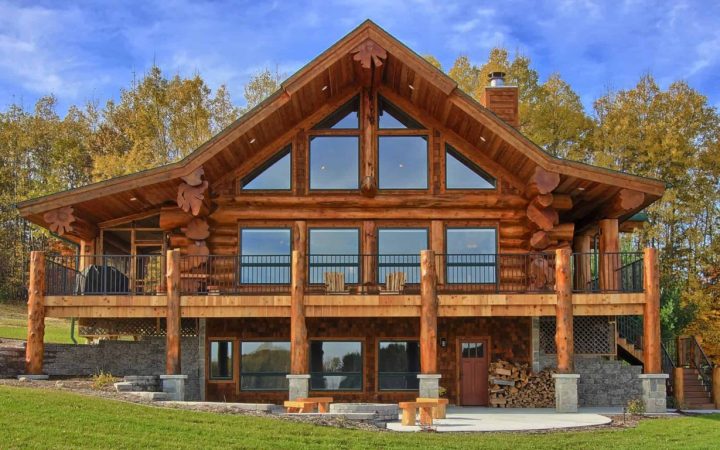
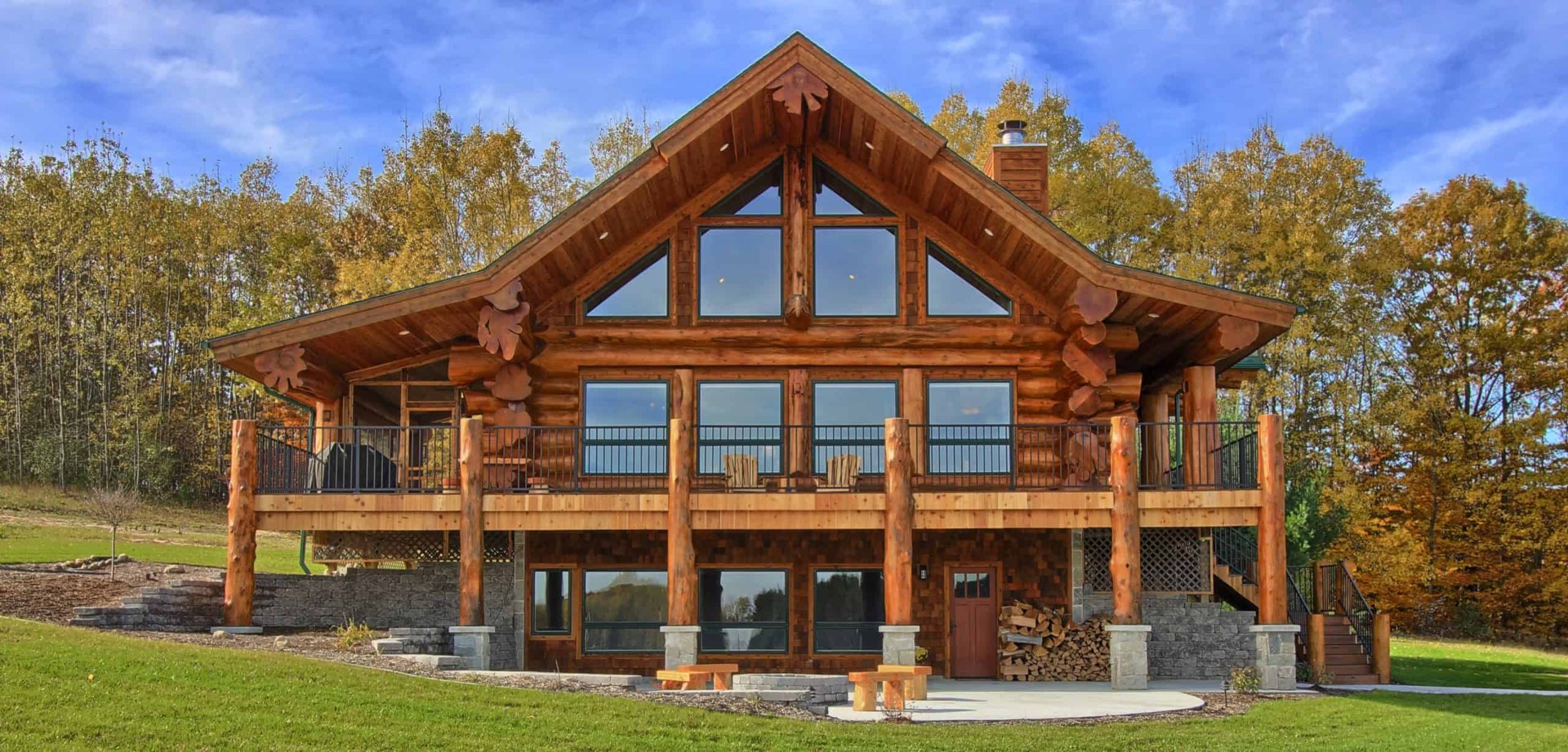
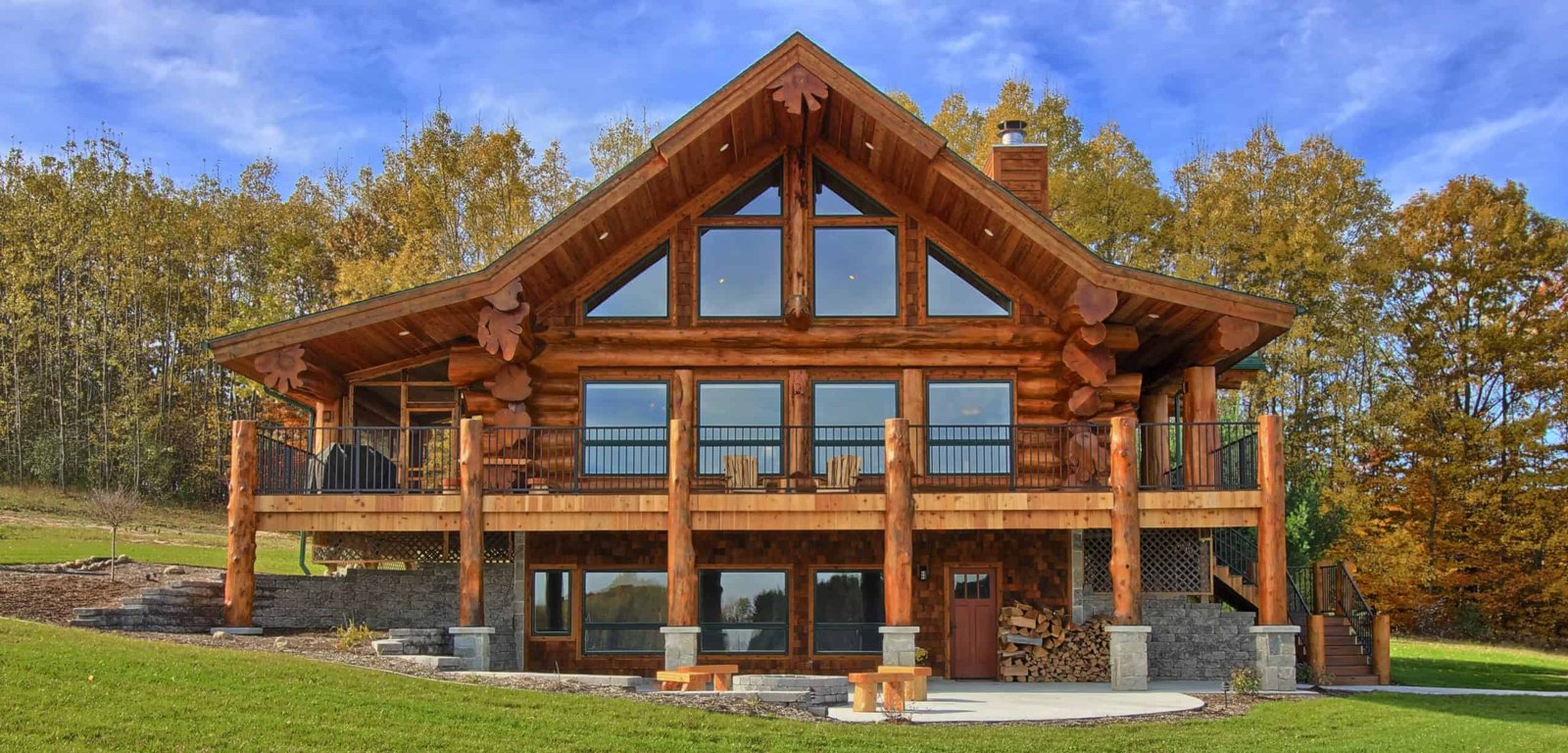
View, which some people regard as a requirement for log homes, can affect the number, size, and location of windows and the resulting balance of wood and glass. Views might also determine whether you have an expansive deck to gaze at a majestic vista, or a shaded porch to watch a dramatic sunrise or sunset.
Slope changes everything
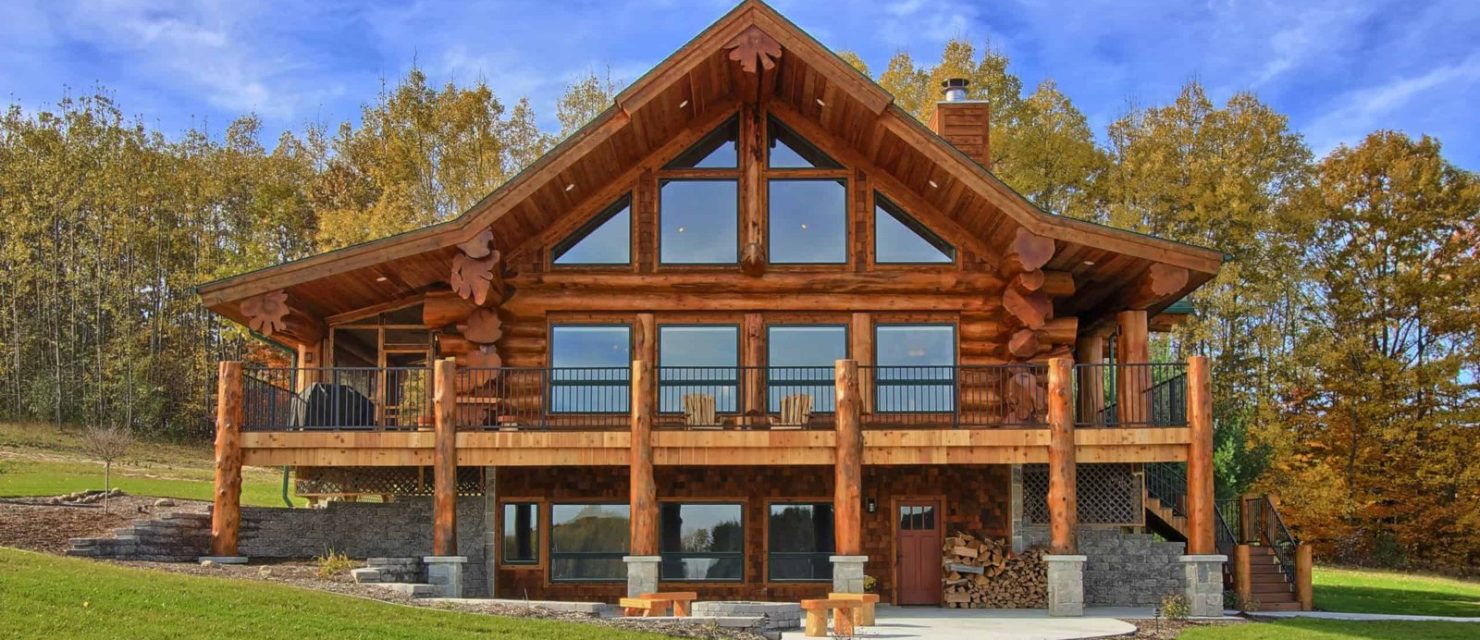
The hilliness of your site could decide whether you have a walkout basement — which can save you from adding a second story — as well as the orientation of the front and back of your house. A steep slope could even determine whether you can build at all, or at the very least whether construction costs will be significantly higher than for a more moderate incline.
Most owners buy their land first, then seek inspiration from it. The aim is to arrive at a design that complements the site rather than contradicts it.
There are folks who design an eye-catching house first, then head out seeking a likely spot to build it. The risk is disappointment when the dream plan doesn’t fit the real ground. Having a general sense of how you prefer to configure your home can actually guide you when you shop for land — just hold the details loosely until you know your site.