
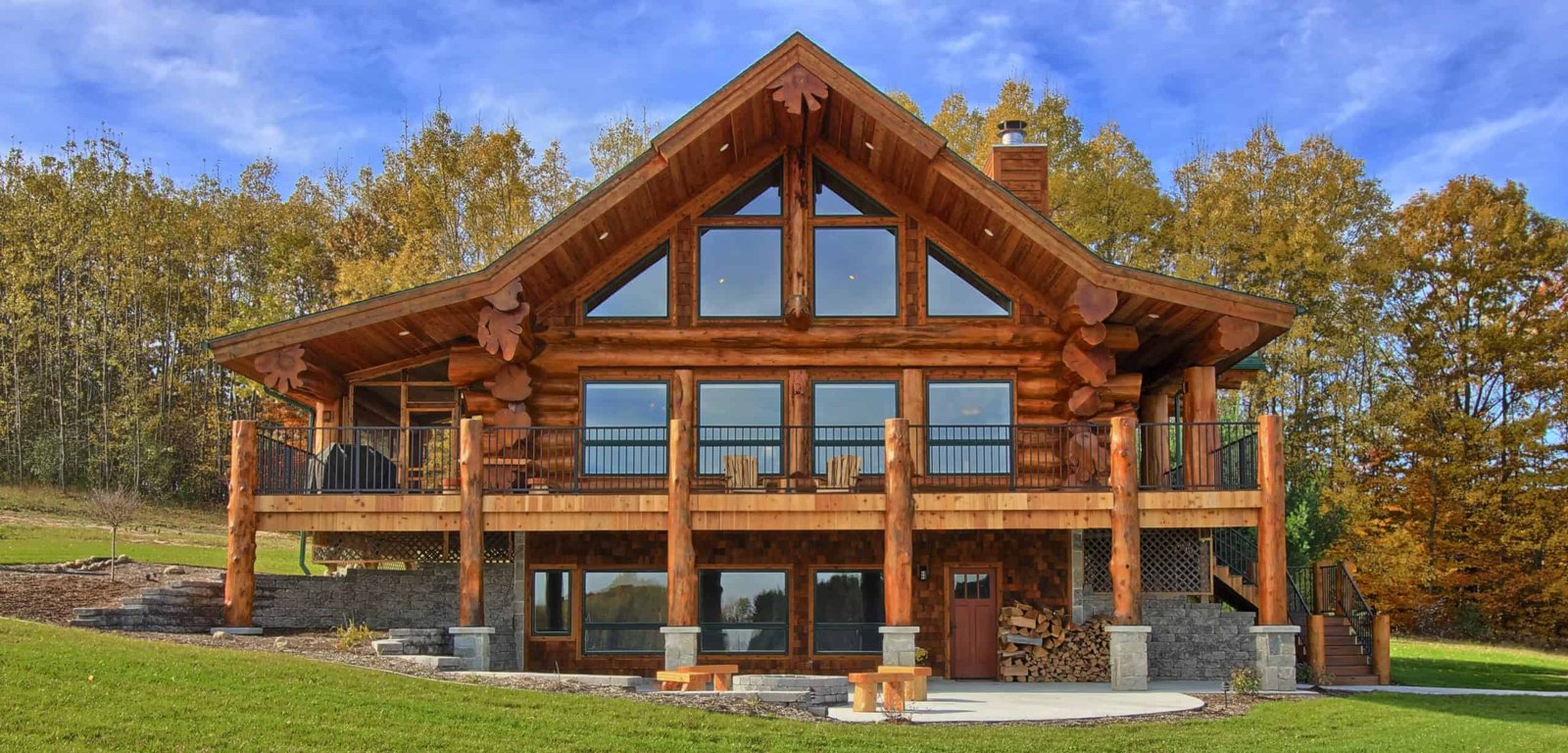
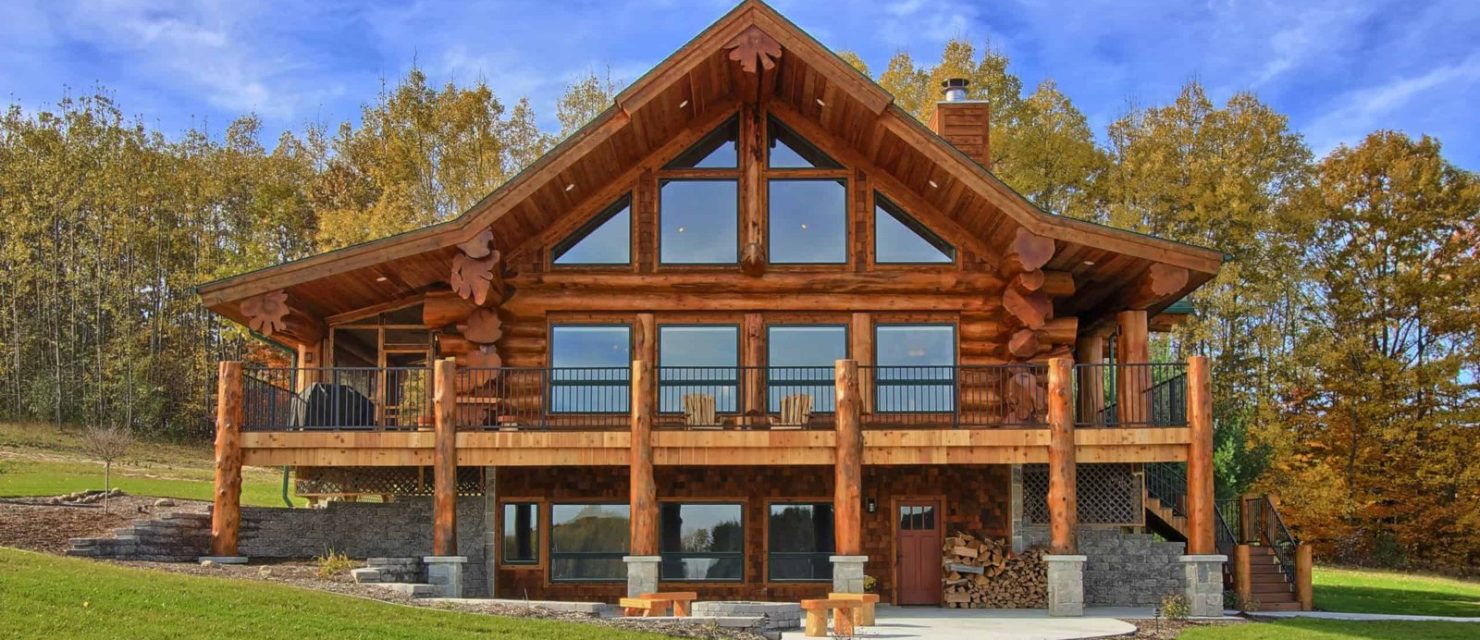
Before you fall in love with a floor plan, fall in love with a place. The land you choose shapes everything that follows — your views, your budget, your foundation, even the shape of your roof. This guide walks you through the entire process, from the first search to the day you stake your corners.
1. Why land comes first
Great log home design flows from its surroundings. Terrain, vegetation, and sunlight all influence the form of the home. Most successful owners buy their land first, then let the site inspire the design — arriving at a home that complements the land rather than fighting it. A plan chosen in a vacuum can lead to expensive compromises once it meets real ground.
2. Where to find land
A good local realtor is invaluable, but online land marketplaces (LandWatch, Lands of America, Realtor.com), county GIS maps, and even local “shopper” papers and Craigslist all surface parcels. Drive the areas you love — many of the best lots sell from a sign at the road. Talk to neighbors; they often know what’s coming up for sale.
3. Evaluating a parcel — the due-diligence checklist
Make every offer contingent on the investigations below. A beautiful lot you can’t legally or affordably build on is not a building lot.
- Zoning & covenants: Confirm residential zoning, minimum setbacks, height limits, and any HOA or architectural covenants. Some areas restrict log exteriors — verify before you buy.
- Legal access & easements: Is there a recorded, year-round legal right-of-way to the parcel? Shared or “prescriptive” access can become a costly headache.
- Water: Municipal hookup, or a well? Ask neighbors about well depth and yield. A deep or low-yield well can cost $15,000–$30,000+.
- Septic & the perc test: Rural parcels need an on-site sewage system, typically $3,000–$30,000+ depending on soil. Require a passing percolation (perc) test before closing.
- Power & internet: How far must power be run? Long runs and transformers add up fast. Confirm cell/internet service if you’ll work from home.
- Flood, wetland & soil: Check FEMA flood maps and look for wetland indicators. A geotechnical/soil check protects your foundation budget.
4. Siting the home on the land
Once the land is yours, a handful of siting decisions shape how the home lives for the next fifty years. Walk the property in different weather and at different times of day before committing to a footprint.
Follow the sun
Orient main living spaces and large windows toward the south (northern hemisphere) to capture winter warmth and daylight, while roof overhangs shade the high summer sun. This single decision can meaningfully cut heating and cooling costs.
Work with the slope
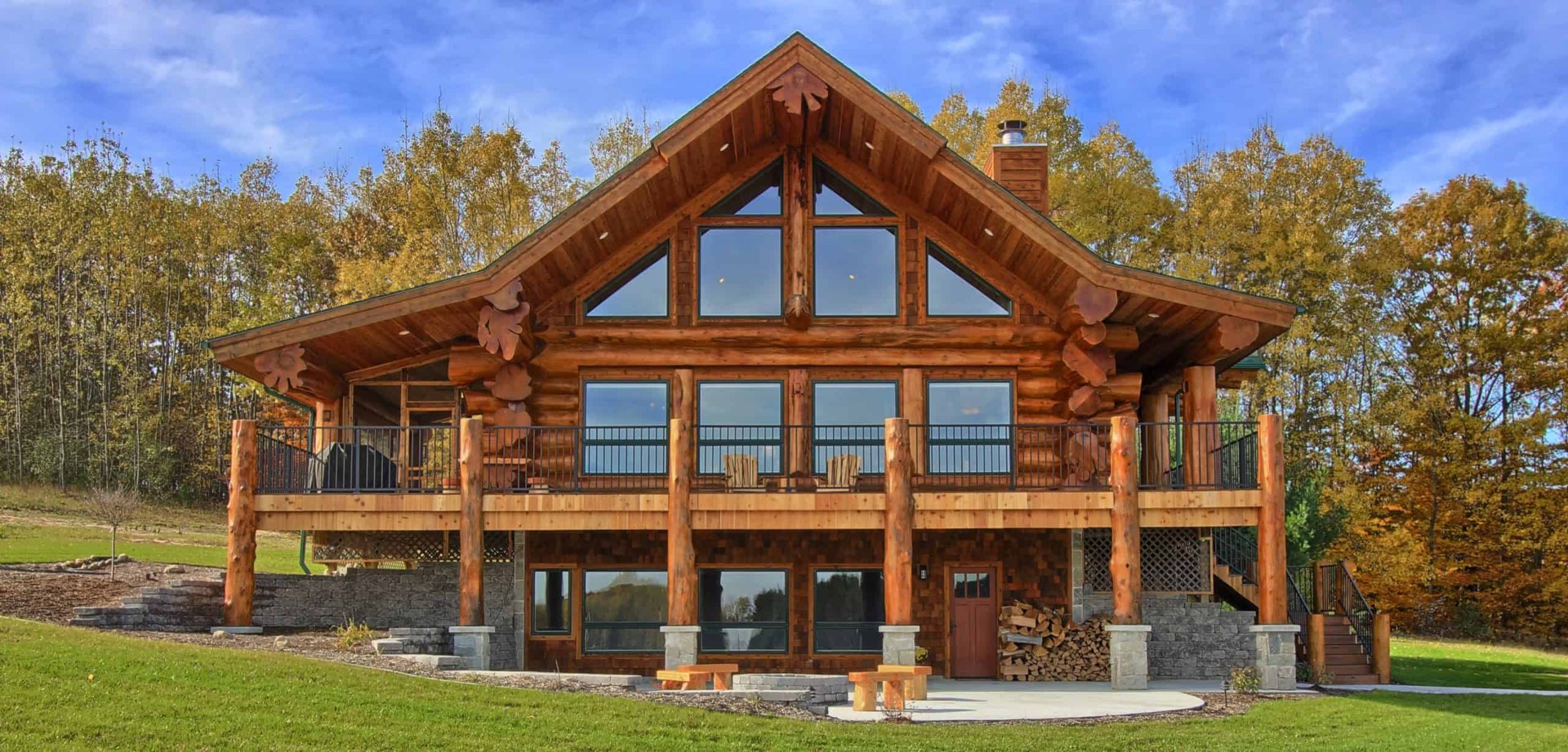
A moderate slope is a gift — it enables a walkout basement that adds a full level of living space without a second story. A steep slope, though, can dramatically raise foundation and driveway costs. Build on high, well-drained ground and direct water away from the home.
Plan the approach
Driveway grade, turning room, and winter access are easy to underestimate. A long, steep, north-facing driveway becomes an icy problem; design it early and realistically.
5. Permits & approvals
Building permits, septic permits, driveway/culvert permits, and sometimes environmental or well permits all take time. Start early, and lean on a builder who has worked in your jurisdiction — local knowledge prevents weeks of delay.
Your land checklist
- Zoning, setbacks & covenants confirmed
- Recorded legal access
- Water source & cost understood
- Passing perc test / septic plan
- Power & internet costed
- Flood / wetland / soil checked
- Sun, slope, drainage & views walked
- Permit path mapped
Do this work up front and the rest of your log home journey gets dramatically smoother. When you’re ready, a Bureau member builder can help you evaluate a specific site.